FTC disclaimer: This post contains affiliate links and I will be compensated if you make a purchase after clicking on my link.
Did you know the global market for this fulfillment model should reach a $594 billion valuation by 2028? It grows at a rate of 22% through 2030. This shows immense potential for new entrepreneurs. You might wonder if starting such a venture still makes sense today.
The ecommerce landscape changes fast, and easy-to-start methods lead the way. This model lets you sell products without any physical inventory. You don’t have to deal with complex shipping logistics. Instead, you connect suppliers with customers.
Many people question the true value of this venture in today’s competitive market. This guide will help you use these big growth trends to build a lasting online business. You’ll learn the key steps to succeed in this changing industry.
Key Takeaways
- Global market projected to reach $594 billion by 2028.
- Annual growth rate remains strong at 22% through 2030.
- Low-barrier entry allows selling without holding physical inventory.
- Model bridges the gap between suppliers and online customers.
- Provides significant scalability for modern ecommerce entrepreneurs.
Understanding Dropshipping Basics
Exploring dropshipping means knowing its basics well. It’s a way to sell without keeping products in stock. You send orders to a supplier, who then ships them to customers.

What is Dropshipping?
Dropshipping lets you sell products without any inventory. This cuts down on financial risks. You don’t need to store products, so you can focus on marketing and sales.
The dropshipping business model makes retail easier. You connect customers with suppliers. You focus on promoting and serving customers.
How Does Dropshipping Work?
Dropshipping is simple. Here’s how it works:
- You start an online store and find a supplier who dropships.
- You list the supplier’s products in your store, setting your prices and descriptions.
- When a customer orders, you send the order to the supplier.
- The supplier ships the product to the customer, with your store’s branding.
- You handle customer service and marketing, while the supplier deals with logistics.
Dropshipping offers benefits like less inventory risk and lower costs. This makes your business flexible and scalable. You can offer many products without managing inventory.
Pros of Dropshipping
Dropshipping has many benefits that make selling online easier. It’s good to know these points before deciding if dropshipping is for you.
Low Startup Costs
Dropshipping has low startup costs. This is great for new business owners. You don’t have to buy a lot of products first. This means less money risk at the start.
- No initial inventory purchase
- Reduced storage and shipping hassles
- Lower overhead costs
No Inventory Management
Dropshipping means no inventory management worries. You don’t have to store products or manage stock. This lets you focus on selling and marketing.
Flexibility and Scalability
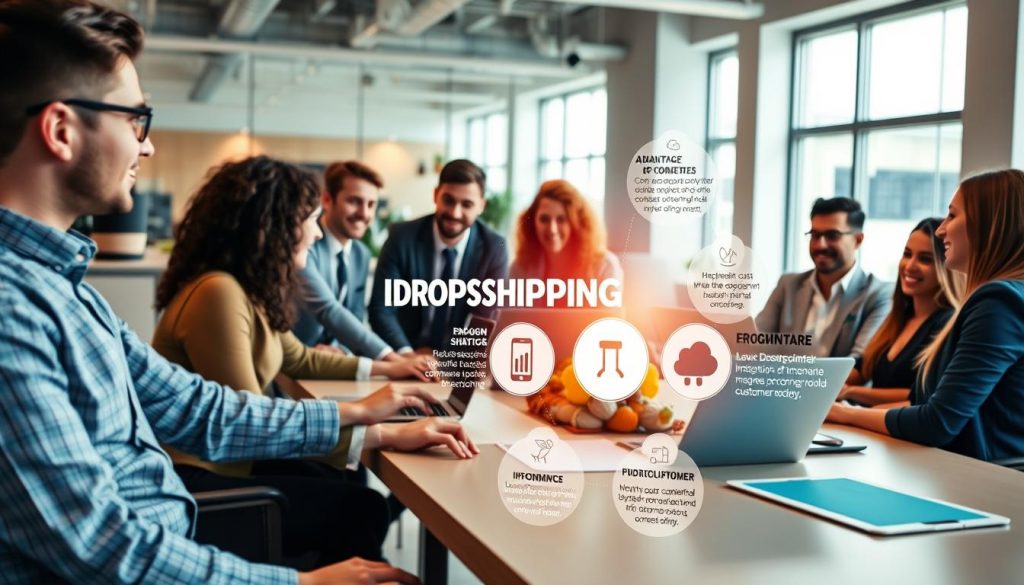
Dropshipping is very flexible and scalable. You can change your store easily without inventory. This helps you keep up with what customers want.
As your business gets bigger, you can grow without spending a lot more. This is a big plus of dropshipping. It lets you offer more products and reach more people.
Knowing the good and bad of dropshipping helps you decide. Weighing these points can show if it fits your business plans.
Cons of Dropshipping
Dropshipping has many benefits, but it also has challenges. Knowing these challenges helps entrepreneurs make smart choices and avoid risks.
Lower Profit Margins
Dropshipping often means lower profit margins. You don’t buy products in bulk. This limits your chance to save money like you can with big orders.
Here’s a table showing profit margins for traditional retail and dropshipping:
| Business Model | Average Profit Margin |
|---|---|
| Traditional Retail | 20-50% |
| Dropshipping | 10-20% |
Supply Chain Issues
Supply chain problems can hurt your business a lot. Since you don’t keep inventory, you rely on suppliers to send products to customers.
“The biggest risk in dropshipping is the lack of control over the supply chain. If your supplier fails to deliver, your business reputation takes a hit.”
It’s key to check your suppliers well and have backup plans ready.
Competition Levels
The dropshipping market is very competitive. Many businesses fight for the same customers. This competition can lower prices and cut into profits.
To be different, focus on unique marketing strategies and great customer service.
Starting Your Dropshipping Business
Starting a dropshipping business can be very profitable. It’s all about making the right choices from the start. These choices help your online store grow and make money.
Finding the Right Niche
Finding a good niche is key to success. Choose a niche you like and has a big market. Use tools like Google Trends and Amazon Best Sellers to find trending products.
It’s also important to know what your customers want. This helps you pick the right products for them.
Choosing a Dropshipping Supplier
After picking your niche, find a reliable supplier. They will send products to your customers. Look for suppliers with a good reputation and fair prices.
You can use directories like SaleHoo or AliExpress to find suppliers. It’s smart to talk to them too. This helps you see how they handle customer service.
Setting Up Your Online Store
Now you’re ready to set up your store. Pick a platform like Shopify or WooCommerce. Make your store look good and easy to use.
Make sure your store is organized and has great product pictures. Also, set up a safe way for customers to pay.
By doing these things, you’ll have a strong start for your business. Success also depends on marketing and great customer service.
Marketing Your Dropshipping Store
Success in dropshipping depends a lot on good marketing. You need to use many marketing channels to find your audience. This helps you stand out in the e-commerce world.
To do well, know your niche and what your customers like. This knowledge helps you make your marketing better and more focused.
Social Media Strategies
Social media is key for dropshipping. It’s where you can talk to customers, show off products, and grow your brand. Here are some tips:
- Identify Your Audience: Find out where your customers are most active online.
- Create Engaging Content: Use great photos and interesting captions to grab people’s attention.
- Leverage Influencer Marketing: Work with influencers to get your products seen by more people.
- Run Targeted Ads: Use ads to reach people who are likely to be interested in what you offer.
SEO for Dropshipping
SEO is important for getting people to find your store on their own. Good SEO includes:
- Keyword Research: Find out what keywords your customers are searching for.
- Optimize Product Listings: Make sure your product names, descriptions, and tags are all about the right keywords.
- Content Creation: Write blog posts that are full of keywords and are high quality.
- Build Backlinks: Get links from other good websites to make your site look more important.
Email Marketing Tips
Email marketing is great for keeping in touch with customers and making sales. Here’s how to make it work:
- Build an Email List: Give people a reason to sign up for your newsletter.
- Personalize Your Emails: Send messages that are just for that person, based on what they like and do.
- Send Regular Newsletters: Keep your subscribers up to date with new stuff, sales, and news about your company.
- Optimize for Mobile: Make sure your emails look good on phones, since lots of people check email on their phones.
Using these marketing tips can really help your dropshipping store get noticed and attract more customers.
Financial Considerations
Dropshipping needs a good understanding of its money side to make money. Knowing the financial parts is key for smart choices that affect your business’s success.
Initial Investment Breakdown
The start-up costs for dropshipping are often less than old-school retail. But, it’s important to know the costs:
- Website Development: Costs for making a good e-commerce site.
- Marketing Expenses: Money for ads to get customers.
- Supplier Fees: Some suppliers might charge for dropshipping.
Even though starting is cheap, spending wisely is crucial for a strong start.
Ongoing Expenses to Consider
After starting, many ongoing costs must be managed to keep your dropshipping business going:
- Marketing and Advertising: Keep spending on ads to bring in sales.
- Website Maintenance: Keep your site up-to-date and safe.
- Customer Service: Costs for good customer support.
Handling these costs well is important for staying profitable.
Pricing Strategies for Profit
Setting the right prices is crucial to stay competitive and make good profits. Think about these strategies:
- Competitive Pricing: Look at what others charge to stay in the game.
- Value-Based Pricing: Price based on what customers think is worth it.
- Dynamic Pricing: Change prices based on demand and competition.
Choosing the right pricing can help your dropshipping business grow and stay strong.
Legalities and Regulations
Dropshipping laws can be tricky, but knowing them is key to a successful business. As a dropshipper, you must follow the rules to avoid problems. This ensures your business runs smoothly.
Business Licenses and Permits
To start a dropshipping business, you need the right licenses and permits. These vary based on where you are and what you sell. It’s important to check the local, state, and federal rules for your business.
Some common licenses include:
- Business license
- Sales tax permit
- Resale certificate
In the U.S., you might need a sales tax permit for online sales. A resale certificate lets you buy products tax-free for resale.
| License/Permit | Description | Typical Requirement |
|---|---|---|
| Business License | Basic license to operate a business | Local or state government |
| Sales Tax Permit | Permit to collect and remit sales tax | State government |
| Resale Certificate | Certificate to buy products tax-free for resale | State government |
Tax Implications for Dropshippers
Dropshipping taxes are important for your business. You must collect and send sales tax on taxable sales. Sales tax rules differ by state, with some being stricter.
“The Supreme Court’s decision in South Dakota v. Wayfair, Inc. (2018) changed sales tax rules for online sellers. Now, states can ask remote sellers to collect sales tax, even without a physical presence.”
To handle taxes well, consider these steps:
- Find out your sales tax nexus
- Get sales tax permits in needed states
- Collect and send sales tax on taxable sales
- Keep accurate records for taxes and audits
By following dropshipping laws and regulations, you can keep your business safe and growing.
Success Stories in Dropshipping
Many entrepreneurs have found great success in dropshipping. They focused on specific markets and built strong brands. You can learn from their stories to help your own journey.
Dropshipping is easy to start and flexible. It lets entrepreneurs find a profitable niche without big competition.
Case Studies
Here are a few success stories in dropshipping:
- A fashion store focused on green clothes. They saw 300% more sales in a year. They used social media and worked with eco-friendly influencers.
- An electronics shop specialized in phone accessories. They got big brand recognition with Google Ads and teamed up with tech YouTubers.
These stories show how important niche marketing and strategic partnerships are for dropshipping success.
Lessons Learned
These case studies teach us important lessons for dropshipping:
| Strategy | Benefit | Example |
|---|---|---|
| Niche Marketing | Less competition, more focused customers | Specializing in green fashion |
| Strategic Partnerships | More visibility, more trust | Working with eco-friendly influencers |
| Effective Marketing | Better known, more sales | Using Google Ads and social media |
By learning and using these strategies, you can boost your dropshipping success.
Common Mistakes to Avoid
Starting a dropshipping business can be tricky. Knowing the common mistakes can help you avoid them. This way, you can focus on growing your business.
Mismanaging Customer Expectations
Managing customer expectations is a big challenge for dropshippers. Clear communication is crucial. Make sure your product descriptions are accurate and keep customers informed about their orders.
Being open about shipping times and any delays can help. Use a system to automatically update customers on their orders.
Overlooking Shipping Times
Shipping times can greatly affect customer happiness. Shipping delays can lead to unhappy customers and lost business. Choose suppliers who can deliver quickly.
To avoid this, consider these steps:
- Compare shipping times from different suppliers to find the best ones.
- Let your customers know when they can expect their orders.
- Offer fast shipping for a little extra cost.
Here’s a look at average shipping times for different suppliers:
| Supplier | Average Shipping Time | Reliability Rating |
|---|---|---|
| Supplier A | 7-10 days | 4.5/5 |
| Supplier B | 10-14 days | 4.2/5 |
| Supplier C | 5-7 days | 4.8/5 |
By knowing these common mistakes and how to avoid them, you can make your dropshipping business more successful.
Final Thoughts: Is Dropshipping Worth It?
Thinking about starting a dropshipping business? It’s key to look at the good and bad sides. With good planning and effort, dropshipping can be a great way to make money.
Assessing Your Business Objectives
It’s important to know what you want from your business. Ask yourself if dropshipping fits your goals. Think about what you hope to achieve with your online store.
Making an Informed Decision
Knowing the ups and downs of dropshipping helps you decide if it’s right for you. With the right approach, you can beat common problems and do well in e-commerce.
Whether dropshipping is good for you depends on your own goals and situation. By thinking carefully and planning well, you can succeed in this fast-changing field.