FTC disclaimer: This post contains affiliate links and I will be compensated if you make a purchase after clicking on my link.
Did you know people spent over $262 billion on cosmetics in 2022? The industry is expected to grow at 4.2% each year until 2030. This shows how much people value taking care of themselves and looking good.
Starting a beauty business is an exciting journey for entrepreneurs. You can create brands that appeal to today’s shoppers by focusing on quality and vision. To start a beauty business, you need to know the market trends and find your niche.
The American market is full of chances for those with clear goals. Using your passion helps you make products that people love. Your success depends on connecting with your audience through good communication.
Key Takeaways
- Global market value exceeds $262 billion annually.
- Industry growth remains steady at 4.2% until 2030.
- High consumer demand exists for innovative brands.
- Success requires understanding current market trends.
- Entrepreneurs must focus on high product quality.
- Planning helps you find profitable niche markets.
Understanding the Beauty Industry Landscape
Starting a beauty business means knowing the industry well. You need to spot current trends, know who your customers are, and understand your rivals.
Key Trends Shaping the Beauty Market
The beauty world is always changing. Trends pop up and then disappear fast. Now, people want products that are good for the planet and don’t harm animals.
The clean beauty market is growing fast. This is because more people want natural and organic stuff.
Personalized beauty is also big. It’s about making products that fit your skin and what you like.
“The clean beauty market is not just a trend; it’s a movement towards a more conscious and sustainable approach to beauty.”
Target Audience and Demographics
Finding out who to sell to is key. You need to know things like age, gender, and how much money they make. You also need to understand what they value and how they live.
Younger people, like Gen Z, are big on social media. They like brands that are green and don’t hurt animals.
| Demographic | Characteristics | Preferred Beauty Trends |
|---|---|---|
| Gen Z | Digital natives, values sustainability | Clean beauty, social media influenced |
| Millennials | Eager for personalized experiences | Customizable products, eco-friendly packaging |
Competitor Analysis: Knowing Your Rivals
Looking at your competitors helps you see where you can stand out. You should check what they’re good at, what they’re not, and how they do things.
For example, if someone is good on social media but not in making things just for you, you could focus on that. This way, your brand can be different.

Creating a Unique Brand Identity
A well-crafted brand identity is key for beauty entrepreneurs. It’s more than a logo or product; it’s the whole experience for customers. Brand recognition comes from repetition and consistency. When you mix branding with a great shopping experience, customers come back.
Importance of Branding in Beauty
In beauty, branding is vital for loyalty and standing out. A strong brand identity creates an emotional bond with your audience. This makes them choose your products over others. Good branding also shares your values and mission, which matters to today’s consumers.
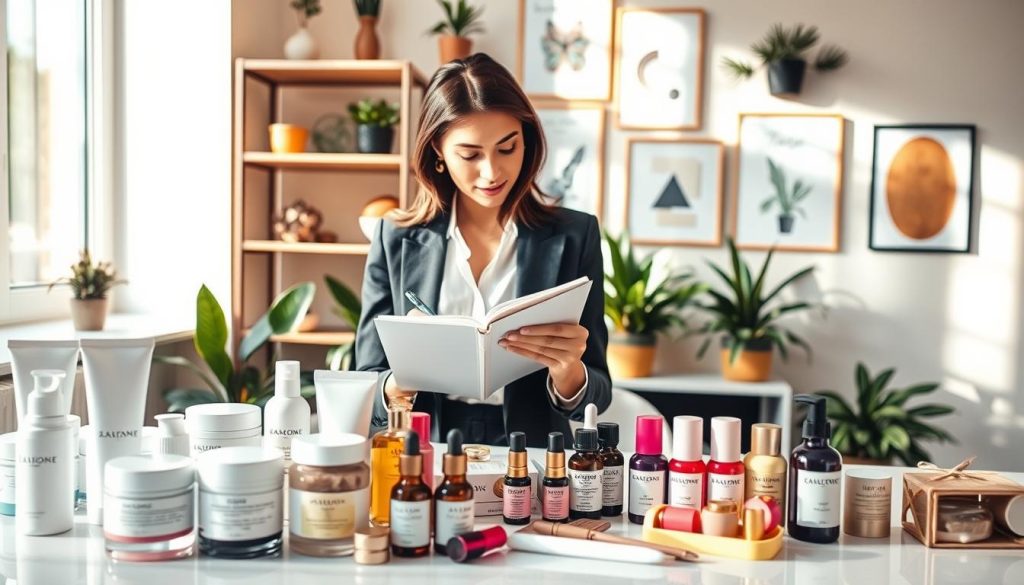
Developing a Memorable Brand Name
Your brand name grabs attention first. It greatly shapes how people see your business. A good name is unique, easy to say, and fits your products. Think about how it looks in ads, on packaging, and online.
Make sure it’s not taken by checking trademarks and social media.
Designing Your Logo and Packaging
Your logo and packaging show your brand. They’re key parts of your identity. A good logo is simple yet stands out, working for all sizes (like cards and billboards).
Package design should look good and work well. It should match your brand’s look. Using eco-friendly materials shows you care about the planet, fitting today’s beauty trends.
Crafting a Comprehensive Business Plan
A good business plan is key for your beauty business. It keeps you focused and attracts investors. It’s like a roadmap to your goals.
“A business plan is not just a document; it’s a strategic guide that helps you navigate the competitive beauty industry,” says a seasoned entrepreneur. This guide is crucial for making informed decisions and adapting to changes in the market.
Elements of an Effective Business Plan
An effective business plan for your beauty business should include several key elements. First, it should provide an executive summary that encapsulates your business idea and objectives. This is followed by a company description, detailing your mission, vision, and the unique value proposition you offer to customers.
Market analysis is another critical component, where you assess the beauty industry landscape, identify your target audience, and analyze your competitors. This information helps you understand market trends and consumer needs, enabling you to tailor your products or services.
- Executive Summary
- Company Description
- Market Analysis
- Products or Services
- Marketing and Sales Strategy
- Financial Projections
Financial Projections and Budgeting
Financial planning is a crucial aspect of your business plan. It involves creating detailed financial projections, including revenue forecasts, expense budgets, and cash flow statements. This helps you understand the financial viability of your business and make informed decisions about investments and funding.
Budgeting is equally important, as it ensures you allocate resources effectively across different areas of your business, such as marketing, product development, and operational costs.
Defining Your Mission and Vision
Defining your mission and vision statements is essential for giving your beauty business a clear direction and purpose. Your mission statement should concisely describe what your business does, its values, and its goals. The vision statement, on the other hand, outlines what you aspire to achieve in the future.
Together, these statements help guide your business decisions and inspire your team to work towards a common objective.
“The key to success in the beauty industry is not just about having a great product, but also about having a clear vision and a well-planned strategy to reach your target audience.”
By crafting a comprehensive business plan that includes these elements, you’ll be better equipped to launch and grow a successful beauty business.
Securing Financing for Your Beauty Business
Starting your makeup business needs the right money to make it real. Making your business official protects your stuff and yours. It’s a big step.
Finding money for your beauty business is key. You’ll look at different ways to get funds, talk to investors and banks, and handle costs. Knowing your options and planning well helps your business grow and stay strong.
Different Funding Options Available
There are many ways to fund your beauty business. You can use:
- Personal savings or emergency funds
- Loans from banks or credit unions
- Investors, like venture capitalists or angel investors
- Crowdfunding platforms
- Grants or competitions for startups
Each way has its good and bad sides. Using your own money gets you cash fast but might leave you short. Getting investors brings money and advice, but it’s a big ask.
Pitching to Investors and Banks
To get money from investors or banks, you must make a strong pitch. Your pitch should show:
- A clear plan for your business, including your goals and money plans
- What makes your business special and better than others
- How you plan to use the money you get
“A good pitch is key to getting the money you need,” a financial expert says. Be sure, ready, and excited about your business when you pitch.
Managing Your Start-Up Costs
Keeping an eye on your start-up costs is crucial. It helps your beauty business stay healthy. You should:
- Make a detailed budget for all your expenses, from making products to marketing
- Focus on what’s really important and cut what’s not
- Watch your money closely to avoid money problems
By watching your money and making smart choices, you can overcome start-up challenges. This sets you up for success in the long run.
Sourcing Quality Products and Ingredients
Finding the right products and ingredients is key to your beauty business’s success. It affects how happy your customers are and your brand’s reputation. When starting a skincare business, knowing the value of quality sourcing is crucial.
To succeed, you must focus on a few important things. First, find reliable suppliers who offer top-quality products. This means researching suppliers, checking their products, and seeing how reliable and helpful they are.
Reliable Suppliers
Getting reliable suppliers is the first step. Look for those who have a good history of delivering quality products on time. Here are some things to think about when looking at suppliers:
- Product quality and consistency
- Price competitiveness
- Shipping speed and reliability
- Customer service and support
Product Regulations and Standards
It’s important to know about product regulations and standards. This helps make sure your products meet industry rules. You need to learn about safety, labeling, and packaging rules.
| Regulation | Description | Impact on Business |
|---|---|---|
| Product Safety Regulations | Ensures products are safe for consumer use | Non-compliance can result in legal action and reputational damage |
| Labeling Requirements | Dictates what information must be included on product labels | Failure to comply can lead to fines and product recalls |
| Packaging Standards | Regulates the materials and design used in packaging | Non-compliance can affect product safety and brand image |
Building Strong Supplier Relationships
Having strong relationships with suppliers is crucial. It helps keep a steady supply of quality products. This means talking well, negotiating fair prices, and paying on time.
By focusing on these areas, you can build a strong supply chain. This will help your beauty business grow and succeed.
Building an Online Presence
To do well in the beauty industry, you need a strong online presence. This shows off your brand’s unique side. It’s about reaching more people and growing your business.
Creating a User-Friendly Website
A good website is key to your online look. It should look nice, be easy to use, and work on phones and tablets. Think about these things when making your site:
- Responsive Design: Make sure your site works well on all devices.
- Clear Navigation: Help visitors find what they need easily.
- Engaging Content: Use great images and interesting content to show off your stuff.
When picking a website solution, look for one that fits your business. It should have e-commerce, SEO help, and customer support.
Leveraging Social Media Platforms
Social media is great for beauty businesses. It lets you talk to your audience, share your story, and promote your products. Here’s how to do it well:
- Content Creation: Share good stuff like tutorials, reviews, and behind-the-scenes peeks.
- Engagement: Talk back to your followers by answering comments and messages fast.
- Advertising: Use ads to find new customers and promote special deals.
Email Marketing Strategies for Beauty Brands
Email marketing is still a good way to connect with people. It’s for sharing new products and special deals. Here’s how to make it work:
- Build Your List: Get people to sign up for your newsletter with discounts or free stuff.
- Personalize Your Emails: Make your messages fit what your subscribers like and do.
- Create Compelling Content: Use catchy subject lines and content that’s useful to your subscribers.
| Email Marketing Strategy | Description | Benefits |
|---|---|---|
| Welcome Emails | Sent to new subscribers with a special offer or introduction to your brand. | Encourages engagement and sets the tone for future communications. |
| Promotional Emails | Used to promote new products, sales, or events. | Drives sales and increases brand visibility. |
| Newsletters | Regular updates about your brand, industry news, and tips. | Keeps your audience informed and engaged. |
By using these tips, you can make a strong online presence. This will help your beauty business grow and succeed.
Developing Your Product Line
Creating a great product line is key to attracting and keeping customers in the beauty world. Your products should meet and go beyond what customers want. This makes your business stand out from others.
It’s important to know what the market needs and what’s missing. This helps you make products that people will love.
Researching Market Needs and Gaps
Knowing what your customers want in beauty products is crucial. Look at what people like, what they’re looking for, and what they don’t like. You can find this out by doing surveys, listening to social media, and looking at what your competitors do.
For example, you might find that people want products that are good for the planet or that don’t harm animals. This can help you decide what to make.
Testing and Refining Your Products
Testing your products is key to making sure they are good quality and safe. Start with a few products and ask a small group of people what they think. Use their feedback to make your products better.
Keep making changes until your products are just right. This way, you can make sure your products are the best they can be.
Packaging and Presentation Strategies
Good packaging does more than just protect your products. It shows what your brand is all about. Think about using packaging that is good for the planet, clear labels, and designs that look nice.
How you show your products, whether online or in stores, should match your brand. This makes the experience better for your customers.
| Packaging Strategy | Benefits | Drawbacks |
|---|---|---|
| Eco-friendly packaging | Appeals to environmentally conscious consumers, reduces carbon footprint | May be more expensive, limited design options |
| Standard packaging | Cost-effective, wide design possibilities | May not stand out, less appealing to eco-conscious consumers |
| Luxury packaging | Enhances brand image, premium feel | Higher costs, may not be budget-friendly for all consumers |
By following these steps and thinking about different things, you can make a product line that your customers will love. This will help your beauty business do well with salon business planning.
Implementing Effective Marketing Strategies
Marketing your beauty business well can be the key to success. It’s important to find what makes you special and choose the right marketing ways. This helps you stand out in the competitive beauty world.
Creating a good marketing plan means using both online and offline methods. Online marketing includes social media, email, and SEO. Offline marketing is about events, print ads, and promotions in stores.
Online vs Offline Marketing Tactics
Online marketing lets you reach more people and see how well your ads do. Sites like Instagram and Facebook are great for showing off your products. Offline marketing, on the other hand, offers a personal touch and connects you with local customers.
It’s smart to mix both online and offline marketing. For example, use online ads to promote your offline events. You can also give special deals to your online followers.
Building a Community Around Your Brand
Creating a community around your brand is key for loyalty and word-of-mouth. Talk to your customers on social media, answer their feedback, and make content they’ll like.
To grow your community, think about a loyalty program or events. This could be a beauty workshop, a product launch, or a social media contest.
Collaborating with Influencers and Bloggers
Working with influencers and bloggers can really help your brand get noticed. Look for influencers who share your values and target audience. Then, suggest partnerships that work for both of you.
When you work with influencers, make sure their content fits your brand. You can also ask them to share their real thoughts on your products. This can make your brand more believable to their followers.
Navigating Legal and Regulatory Requirements
To make your beauty business real and lasting, you must know the laws that rule it. The beauty world has many rules that change by place. So, it’s key to keep up with these.
Business Licenses and Permits
Getting the right business licenses and permits is a big step. The licenses you need depend on your business type, like a salon or cosmetics maker. Make sure to get any needed licenses and permits for your state.
For example, if you start a cosmetics business, you must follow FDA rules. Having the right permits shows you’re serious and trustworthy to customers and partners.
Complying with Health and Safety Regulations
Health and safety rules are very important in the beauty world. They keep customers safe and make your brand look good. You must follow rules on making products and labeling them right.
It’s also key to keep your business clean and safe. This is true for salons, spas, or factories. Regular checks and training for staff help you meet these standards.
Protecting Your Intellectual Property
Your brand and ideas are very valuable in the beauty world. Using trademarks, copyrights, and patents can stop others from copying you. This keeps you ahead of the competition.
Think about registering your brand name and logo as trademarks. Also, if you have special products or packaging, patents might be a good idea.
By understanding and following the law, you can build a strong beauty business. This makes it real, lasting, and ready to grow.
Establishing a Sales Channel
To sell your beauty products, you need a reliable sales channel. You can sell online, in stores, or both. A good plan is key for your makeup business startup success.
Think about what your customers like. Younger people might like online shopping. But, high-end products might do better in stores.
Choosing Between E-commerce and Retail
E-commerce is great for reaching more people and saving money. But, it costs a lot for digital ads. Stores offer a real experience and personal service. Yet, they cost more and reach fewer people.
When picking between online and stores, think about:
- Your customers’ shopping habits
- What your products are like
- Your brand’s special thing
- How good you are at marketing and getting products out there
Setting Up an Online Store
For online sales, a good website is crucial. Pick a platform, design a nice site, and make sure payments and shipping are safe. Your site should show off your brand and make shopping easy.
To make your online store better, try these:
- Use great photos and clear descriptions
- Add customer reviews and ratings
- Have good prices and deals
- Make sure it works well on phones and loads fast
Partnering with Beauty Salons and Retailers
Working with salons and stores can grow your business. Find partners, talk about deals, and make sure your products are shown well. This way, you can use their customers and learn from them.
To partner well, focus on:
- Building good relationships with owners
- Teaching their staff about your products
- Keeping your brand and product quality the same everywhere
- Checking how the partnership is doing and making changes
By picking the right sales channel, you can reach your audience and sell more. Whether online, in stores, or both, a solid plan is key for your beauty business checklist success.
Measuring Success and Scaling Your Business
Starting a business in the beauty industry is exciting. But, it’s key to measure success and grow your business. You must check and change your plans often. This helps you keep up with new trends and what customers want.
Tracking Performance
Important signs of how well you’re doing include sales, how much it costs to get new customers, and social media fans. Watching these helps you see where you can get better. You can then make smart choices to improve your business.
Growth Strategies
To grow your beauty business, think about adding new products, going into new places, or working with influencers. When starting a skincare business, remember to keep your focus on your main customers. Always check what they need to help your business grow.
Adapting to Change
Being quick to change is vital in the beauty industry. Listen to what customers say and keep up with trends. This way, you can keep your business strong and successful for a long time.