FTC disclaimer: This post contains affiliate links and I will be compensated if you make a purchase after clicking on my link.
The internet is growing fast. The old address system is running out of space. We need a better way to connect online.
When you’re online, knowing about IPv4 and IPv6 is key. IPv4 used to be enough but now it’s too small. IPv6 has lots more room for growth.
Key Takeaways
- Understanding the differences between IPv4 and IPv6 is essential for navigating the evolving digital landscape.
- The limited address space of IPv4 is a significant constraint in today’s connected world.
- IPv6 offers a much larger address space, making it a more suitable option for future growth.
- Choosing between IPv4 and IPv6 depends on your specific needs and the requirements of your network.
Understanding Internet Protocols
To understand IPv4 and IPv6, you need to know what internet protocols are. They define how data moves over the internet.
What is an Internet Protocol?
An internet protocol sets the rules for data packets on the internet. It helps devices talk to each other.
The Role of IP in Network Communication
The Internet Protocol gives each device a unique address. This address helps data packets find their way.
IPv4 and IPv6 are two types of Internet Protocol. IPv4 has a 32-bit address, while IPv6 has a 128-bit address. This makes IPv6 much bigger. Knowing these protocols helps manage networks.
The Evolution from IPv4 to IPv6
The development of IPv6 was a response to the impending exhaustion of IPv4 addresses. It was also needed for enhanced protocol capabilities. As the internet grows, moving from IPv4 to IPv6 is key.
Brief History of IPv4
IPv4, or Internet Protocol version 4, was first deployed in 1982-1983. It has been the backbone of internet communication ever since. It was designed to give a unique address to devices on the network.
Why IPv6 Was Developed
The main reason for IPv6 was to solve the problem of IPv4 address exhaustion. With the fast growth of internet-connected devices, a bigger address space was needed.
Timeline of IPv6 Implementation
IPv6 was finalized by 1998. But its implementation has been slow. The transition involves adopting the new protocol and ensuring it works with existing IPv4 infrastructure.
| Year | Milestone |
|---|---|
| 1982-1983 | IPv4 deployment |
| 1998 | IPv6 finalization |
| 2000s | Initial IPv6 implementation begins |
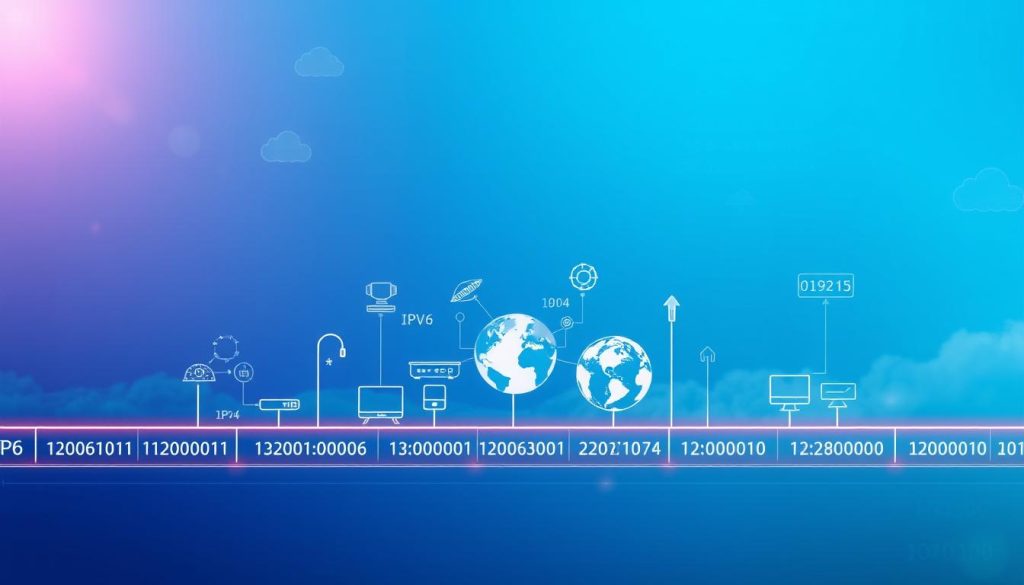
The move to IPv6 is still happening, with big steps forward in recent years. Knowing this evolution is key to figuring out which internet protocol is best for you.
IPv4 vs IPv6: Key Technical Differences
When we look at IPv4 and IPv6, we see big differences. These affect how well networks work and what they can do. Knowing these differences helps you choose the right internet protocol for your needs.
Address Format and Length
IPv4 and IPv6 have different address formats and lengths. IPv4 uses 32-bit addresses, which limits the number of addresses. IPv6 uses 128-bit addresses, offering much more space for devices.
Header Structure
The headers of IPv4 and IPv6 are also different. IPv6’s header is simpler and more efficient than IPv4’s. This makes handling packets better and faster.
Packet Size and Fragmentation
IPv6 handles packet size and fragmentation differently than IPv4. In IPv6, the source node handles fragmentation, not routers. This makes packet handling more efficient and reduces delays.
Checksum Processing
Checksum processing is another area where IPv4 and IPv6 differ. IPv4 has a header checksum, but IPv6 does not. IPv6 relies on lower-layer protocols for error checking, which saves processing time.
It’s important to understand these differences when deciding between IPv4 and IPv6. These factors help you choose the best protocol for your network needs.
- IPv4 uses 32-bit addresses, while IPv6 uses 128-bit addresses.
- IPv6 has a simplified header structure for improved efficiency.
- Packet fragmentation is handled differently in IPv6.
- IPv6 does not include a header checksum.
When picking between IPv4 and IPv6 for your network, remember these key differences. They can affect how your network works and what it can do.
Address Space and Allocation
The internet is growing fast, and we need more IP addresses. Moving from IPv4 to IPv6 is key. We must understand the differences in address space and how to allocate them.
IPv4 Address Exhaustion
In 2011, we hit a big milestone. IPv4 address exhaustion happened, meaning we ran out of IPv4 addresses. IPv4’s 32-bit address space only lets us have about 4.3 billion unique addresses. This number used to seem huge but now it’s not enough for our connected world.
IPv6’s Expanded Address Space
IPv6, on the other hand, has a 128-bit address space. This means it can offer almost endless unique addresses. This big change helps us avoid running out of addresses. It also supports more IoT devices, mobile networks, and new technologies.

Current Global Allocation Status
Today, we’re still giving out IPv6 addresses all over the world. Groups and internet registries handle this job. The use of IPv6 is growing fast because we need more addresses.
Regional Internet Registry Policies
Regional Internet Registries (RIRs) are important for managing IP addresses in their areas. Each RIR has its own rules for giving out IPv6 addresses. These rules help balance saving addresses and giving out lots of them. A well-known expert said,
“The allocation policies for IPv6 must be flexible enough to accommodate the rapidly evolving internet landscape.”
It’s clear that how we allocate IP addresses is very important. This is true whether we’re using IPv4 or IPv6.
Security Features Comparison
It’s key for network admins to know the security differences between IPv4 and IPv6. Recognizing the unique security features of each is crucial. This helps in navigating the internet protocol complexities.
Native Security in IPv6
IPv6 was made with security in mind. It has IPsec as a built-in feature. This means your data gets end-to-end encryption and authentication.
This boosts the security of IPv6 networks. You can rest assured that your data stays safe from unauthorized access.
Security Challenges in IPv4
IPv4, on the other hand, needs extra security steps. IPsec isn’t built-in. This can make things more complex and vulnerable if not set up right.
You need to be ready for these challenges to keep your IPv4 networks secure.
IPsec Implementation Differences
IPsec setup is different for IPv4 and IPv6. IPv6 must have IPsec, but IPv4 doesn’t. This changes how you manage IPsec on your networks.
Privacy Extensions in IPv6
IPv6 also has privacy extensions. These help keep your online activities private. They make it hard for hackers to track you by your IP address.
In summary, IPv6 has better security than IPv4. It has native IPsec and privacy extensions. Knowing these differences is important for making the right security choices for your network.
Performance and Efficiency
It’s key to know how IPv4 and IPv6 perform and how efficient they are. As networks get bigger and more complex, they need to handle more traffic and data. This is where the right protocol comes in.
Routing Efficiency
IPv6 makes routing better by making the header simpler. This means routers can forward packets faster and with less delay. IPv4’s complex headers, on the other hand, slow things down.
Packet Processing Speed
IPv6 is faster at processing packets than IPv4. It skips checksum checks at each step and makes header processing easier. This makes networks run smoother.
Network Congestion Handling
IPv6 tackles network congestion in a new way. It prioritizes traffic and manages Quality of Service (QoS) better. This helps avoid network jams.
Multicast and Broadcast Differences
IPv6 boosts multicast and gets rid of broadcast. This cuts down on network traffic and boosts efficiency. IPv4 uses both, which can cause more congestion.
In short, IPv6 beats IPv4 in many areas. It’s better at routing, packet processing, handling congestion, and multicast. These benefits are important when choosing a protocol for your network.
Configuration and Management
Setting up IPv4 and IPv6 networks is different. Knowing these differences is key for good network management.
Auto-configuration Capabilities
IPv6 makes auto-configuration easier, thanks to Stateless Address Autoconfiguration (SLAAC). SLAAC lets devices set their own IP addresses without a DHCP server. This makes setting up networks simpler and saves time.
DHCP vs SLAAC
DHCP is common in IPv4 for giving out IP addresses. IPv6 uses SLAAC for auto-configuration. You need to think about the pros and cons of each for your network.
SLAAC is easier for setting up addresses. But DHCP gives you more control over IP addresses.
Network Administration Differences
Managing networks is different for IPv4 and IPv6. IPv6 makes changing network numbers easier and has better security. It’s important to know these differences for good network management.
Troubleshooting Considerations
When fixing problems, knowing the differences between IPv4 and IPv6 is important. Understanding these differences helps solve connection issues. For example, IPv6’s SLAAC changes how you manage and fix IP address problems.
Global Adoption Rates and Case Studies
IPv6 adoption is growing fast. This is because we need a stronger and safer internet. As we connect more, moving to IPv6 is key for many groups.
Current IPv6 Deployment Statistics
IPv6 adoption rates differ around the world. The U.S., Germany, and India are leading. You can see how they’re doing on online stats sites.
Major Organizations That Have Transitioned
Big names like Google, Facebook, Microsoft, and Comcast have switched to IPv6. They show it can be done smoothly with good planning.
Challenges Faced During Implementation
But, many groups face hurdles when going to IPv6. These include:
- Old systems not working with new ones
- Need for more training and staff
- Worries about security during the change
Lessons Learned from Early Adopters
First ones to use IPv6 have shared important tips. A detailed plan, lots of testing, and training for IT staff are key. Also, learning from others’ stories can help a lot.
Knowing what worked and what didn’t helps you plan better for your own switch to IPv6.
Transition Mechanisms and Coexistence
IPv4 and IPv6 work together in today’s networks. It’s key to know how they do this. Learning about these methods will help your transition to IPv6 go smoothly.
Dual-Stack Implementation
Dual-stack is a main way both IPv4 and IPv6 run on devices. This lets you talk to both types of networks at the same time. It’s a big plus for working with different network types.
Tunneling Protocols
Tunneling protocols are vital for moving IPv6 over IPv4 networks. 6to4 and Teredo are examples. They help IPv6 packets get through even when the network only supports IPv4.
Translation Mechanisms
NAT64 and DNS64 help IPv6 and IPv4 talk to each other. NAT64 changes IPv6 addresses to IPv4. This lets IPv6 devices reach IPv4 servers. DNS64 makes it easier for IPv6-only devices to find IPv4 addresses.
Implementation Costs and Considerations
Think about the costs and challenges of using these methods. Upgrading hardware and software, and dealing with complex networks, can be expensive. Also, consider how well your plan will grow and be managed.
Important things to think about include:
- Looking at your current network setup
- Figuring out if you need to update hardware or software
- Planning for any downtime during the switch
- Making sure your new setup works with your current services
Knowing about these methods and their costs helps you plan your IPv6 move better.
Making the Right Choice: IPv4 or IPv6 for Different Use Cases
To choose between IPv4 and IPv6, look at your specific needs. Different places need different things. Knowing what you need helps you decide.
For Home Networks
At home, IPv4 works well because of NAT. This lets many devices use one public IPv4 address. But, as more devices connect, thinking about IPv6 can help your network grow.
For Small Businesses
Small businesses have simpler networks. They can use either IPv4 or IPv6. IPv6 is good for easy setup and less NAT. But, IPv4 might be better for older systems.
For Enterprise Networks
Big networks need careful planning. IPv6 brings better security and lots of addresses. But, switching to IPv6 is hard. Many use both IPv4 and IPv6 to keep things working.
For Service Providers and ISPs
Service providers and ISPs are key in switching to IPv6. They must support both IPv4 and IPv6. This helps avoid running out of IPv4 addresses.
For Mobile and IoT Applications
IPv6 is great for mobile and IoT. It has lots of addresses and makes connecting easier. It’s perfect for the growing number of IoT devices.
When picking between IPv4 and IPv6, think about your network’s needs. Here’s a quick guide:
| Use Case | IPv4 Considerations | IPv6 Considerations |
|---|---|---|
| Home Networks | Sufficient with NAT, widely supported | Future-proofing, auto-configuration |
| Small Businesses | Compatibility with older systems | Simplified configuration, enhanced security |
| Enterprise Networks | Established infrastructure, compatibility issues | Large address space, improved security |
| Service Providers & ISPs | Address exhaustion, legacy support | Scalability, future readiness |
| Mobile & IoT | Limited address space, complexity | Large address space, mobility features |
In conclusion, pick IPv4 or IPv6 based on your network’s needs. Whether it’s for home, business, or IoT, knowing the pros and cons is key.
Conclusion: The Future of Internet Protocols
The debate between IPv4 and IPv6 is not just about tech. It’s about the internet’s future. IPv6 is set to be the internet’s backbone, offering more scalability, security, and efficiency.
The ipv6 future is bright, with more addresses and better security. As the internet grows, IPv6 will be key in shaping its future.
IPv6 is better for today’s digital world. As we move to IPv6, we’ll enjoy new tech and innovations.
The move to IPv6 is essential for the internet’s growth. Knowing the differences between IPv4 and IPv6 helps you make smart choices for your online setup.