FTC disclaimer: This post contains affiliate links and I will be compensated if you make a purchase after clicking on my link.
Did you know thousands of new clothes brands start every year? Yet, almost eighty percent fail within months. This high failure rate often comes from bad planning and weak market position.
To start your dream store, you need meticulous planning and deep market knowledge. This guide to starting retail business will help you on your path. It talks about the challenges of building your unique brand.
Setting up your store right is key for growth. Success favors the prepared entrepreneur who knows the American market well. We’ll cover market research until keeping customers loyal.
Key Takeaways
- Market research prevents early business failure.
- Solid positioning differentiates your brand from competitors.
- Operational planning is vital for long-term survival.
- Understanding the US fashion market helps growth.
- Customer loyalty remains the core pillar of success.
- Strategic systems protect your initial investment.
Understanding the Clothing Market
Before you start in fashion retail, you must know the clothing market. It’s key to understand your target market. This means looking into demographics, psychographics, trends, and how people buy things.
Researching Fashion Trends
To lead in the clothing market, you must know the latest trends. This means:
- Following fashion blogs and influencers
- Attending fashion shows and trade events
- Looking at what people like and buy
Knowing the latest trends helps you make smart choices about what to sell and how to market it.
Analyzing Competitors
Looking at your competitors is important. It helps you find what’s missing and how to stand out. Think about:
- What they sell and how much they charge
- How they market and brand themselves
- How they talk to and listen to their customers
Knowing what your competitors do well and not so well helps you plan how to compete.

Identifying Your Target Audience
Finding out who your audience is is crucial. It helps you make products and marketing that really speak to them. This means understanding:
- Who they are: age, gender, how much money they make
- What they like and value
- How they shop and what they prefer
By knowing your audience, you can create marketing that really connects with them. This can help you sell more.
Understanding the clothing market helps you make smart choices for your business.
Choosing Your Niche
The success of your clothing store depends on picking the right niche. This could be based on demographics, style, or values. This choice affects everything from product design to marketing.
You have many options for your niche. You can focus on a specific demographic or style that fits your brand.
Women’s, Men’s, or Children’s Fashion
Deciding on women’s, men’s, or children’s fashion is a big choice. Each has its own challenges and chances.
- Women’s Fashion: This market is big and competitive. But, there’s always a need for quality, stylish clothes.
- Men’s Fashion: Men’s clothes might be less competitive. But, you need to know the latest trends and what men like.
- Children’s Fashion: For kids, you must think about durability, comfort, and safety, along with style.
Sustainable and Ethical Fashion
Sustainable and ethical fashion is getting more popular. It appeals to people who care about the environment. Focusing on this can build a loyal customer base.
Key points include:
- Using eco-friendly materials
- Ensuring fair labor practices
- Reducing waste and carbon footprint
Streetwear vs. Formal Wear
Another big choice is whether to focus on streetwear, formal wear, or both. Streetwear follows trends and cultural movements. Formal wear is about quality and timeless designs.
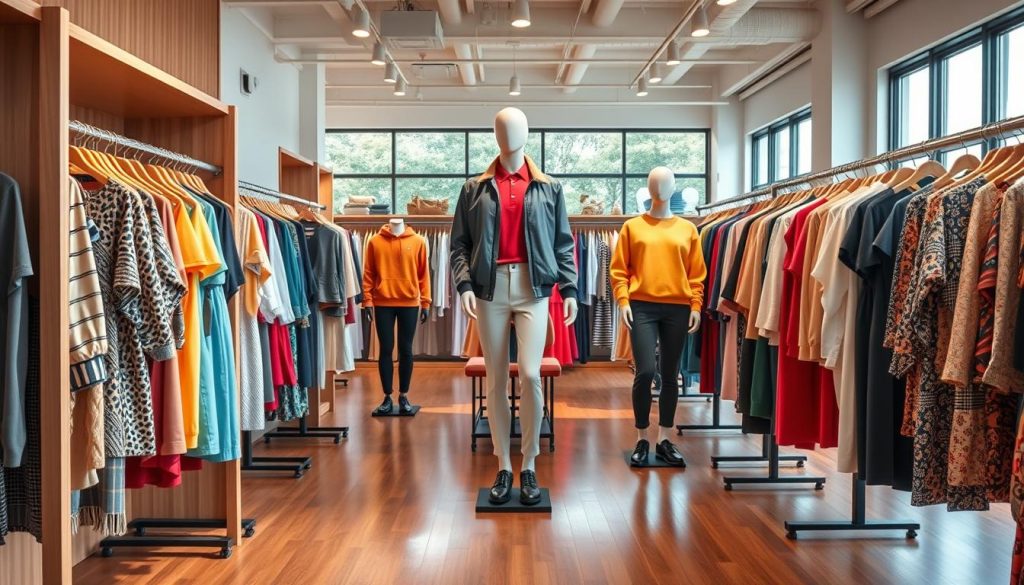
Choosing your niche well can make your store stand out. It helps attract a loyal customer base. This focused approach is key in your fashion store startup guide and in launching your clothing retail store.
Creating a Business Plan
A business plan is like a map for your clothing store. It helps you navigate the retail world. It outlines your goals, how to reach them, and when.
Defining Your Business Model
Your business model is the base of your store. It shows how you make money and stay profitable. You need to think about what you sell, how much you charge, and where you sell it.
“The business model is the core of your business plan, outlining how you will create value for your customers and capture value in return,” says a retail business expert.
When setting up your business model, think about these things:
- Revenue streams: How will your store make money?
- Key activities: What main things drive your business?
- Key resources: What do you need to run your business?
- Value proposition: What makes your store special to customers?
Financial Projections and Budgeting
Financial projections are key to your plan. They show what your store’s money situation will be like in the future. This includes income, balance sheets, and cash flow.
To make good financial projections, you need to know a lot about your future. Look at market trends, understand your costs, and guess your sales.
Marketing Strategy Overview
A marketing strategy is vital for getting and keeping customers. It tells you how to promote your store, connect with your audience, and increase sales.
“A well-crafted marketing strategy is key to differentiating your clothing store in a crowded market and building a loyal customer base,” notes a marketing specialist.
Your marketing strategy should cover:
- Target market analysis: Know who your ideal customer is.
- Brand positioning: Decide how you want your store to be seen.
- Marketing channels: Pick the best ways to reach your audience, like social media or email.
Legal Requirements for Starting a Store
Starting an apparel shop means you need to know the law. It’s key to pick a legal structure for your business. This protects your stuff and makes sure you follow the rules.
Registering Your Business
First, you must register your business. You can choose from a sole proprietorship, partnership, LLC, or corporation. An LLC is good because it protects you and saves on taxes.
When you register, pick a name that fits your state’s rules. Then, file papers with your state’s Secretary of State. You’ll also need to get any needed licenses and permits.
Understanding Permits and Licenses
You might need different permits and licenses to open your store. These include a sales tax permit, business license, and zoning permits. Knowing what you need helps you avoid trouble.
A sales tax permit lets you collect and send sales tax to the state. A business license lets you run your business in a certain area.
Trademarking Your Brand
Trademarking your brand is very important. It makes your brand stand out and keeps customers coming back. To trademark, you must check if your mark is unique.
After checking, you can apply to the USPTO. This step can be tricky. It’s wise to talk to a trademark lawyer to help.
By registering, getting permits, and trademarking, you’re on the right path. You’ll have a legal and successful clothing store.
Funding Your Clothing Store
To start your clothing store, you need to find money. Getting funds is key for any retail business. There are many ways to get the money you need.
It’s important to know about different funding types. You can look at loans, crowdfunding, or grants. Each has its own good and bad points.
Exploring Traditional Loans
Loans from banks are a common choice. They give a lot of money but need a good plan and something to back it. Loans have a fixed rate and term, helping you plan your money better.
But, getting a loan is hard. You must have a detailed plan and financial info. This shows your store can do well.
Crowdfunding Options
Crowdfunding lets you raise money from many people online. It’s not just for money; it shows if people want your idea.
There are many sites like Kickstarter and Indiegogo. Each has its own rules and costs. You must make a good campaign with a strong pitch and cool rewards.
Grants for Small Businesses
Grants are special funds for certain businesses. They don’t have to be paid back, which is great.
But, getting a grant is tough. You must show how your store fits the grant’s goals. Finding the right grants is key.
In short, funding your store needs thought. Know the ups and downs of loans, crowdfunding, and grants. This helps you choose the best for your business.
Selecting the Right Location
Your clothing store’s location is key to success. It affects visibility and appeal to your audience.
Understanding Foot Traffic
Foot traffic is crucial for a clothing store’s success. Busy areas like shopping districts or malls boost visibility. Think about the people walking by and if they match your target audience.
Key considerations for foot traffic include:
- Proximity to public transportation hubs
- Nearby businesses and their impact on foot traffic
- Local events that could attract potential customers
Evaluating Lease Terms
After finding a good location, check the lease terms. Look at the lease length, rent, and any special clauses.
| Lease Term | Description | Considerations |
|---|---|---|
| Lease Duration | The length of time you’re committed to renting the space. | Ensure it aligns with your business plans. |
| Rent Costs | The monthly or annual cost of renting the space. | Factor this into your budget and financial projections. |
| Renewal Clauses | Conditions under which you can renew the lease. | Understand the process and potential changes in terms. |
Online vs. Brick-and-Mortar Strategies
You can sell online, in a physical store, or both. Each has its own pros and cons.
Choose based on your audience, business model, and what you can do. Some do well online, while others need a physical store.
Comparison of Online and Brick-and-Mortar Strategies:
| Aspect | Online | Brick-and-Mortar |
|---|---|---|
| Reach | Global, with potential to reach a wide audience. | Local, limited to the surrounding area. |
| Customer Experience | Convenience of shopping from anywhere. | Tactile experience, allowing customers to touch and try products. |
| Operational Costs | Lower overhead costs compared to maintaining a physical store. | Higher costs due to rent, utilities, and staffing. |
Designing Your Store Layout
A good store layout is key for your apparel shop’s success. It makes shopping better and helps customers find what they want. Think about these important points when planning your layout.
Utilizing Visual Merchandising
Visual merchandising is vital for your store’s look. It makes displays that catch the eye and show off your products well. Good visual merchandising can pull customers in and guide them through the shop.
To make the most of visual merchandising, try these tips:
- Choose attractive mannequins and display fixtures.
- Make focal points with key products or deals.
- Keep your store clean and tidy.
Creating an Inviting Atmosphere
The feel of your store affects how comfortable customers are and how long they stay. Lighting, music, and scent play big roles in making your store welcoming.
Here are ways to improve your store’s atmosphere:
| Element | Description | Impact |
|---|---|---|
| Lighting | Use a mix of ambient and accent lighting. | Shows off products and makes the place feel welcoming. |
| Music | Pick music that fits your brand. | Improves the shopping experience and sets the mood. |
| Scent | Choose soft, nice smells. | Makes the place memorable and inviting. |
Maximizing Space Efficiency
Using space well is key to making your store feel big and easy to get around. Smart use of space also lets you show more products.
Here are ways to use space better:
- Use tall shelves to make the most of vertical space.
- Plan a clear and simple store layout.
- Keep the floor clear to avoid clutter.
Building a Brand Identity
In the world of fashion retail, a unique brand identity can make all the difference. It can turn a store into a success or just a place to pass by. When you start your clothing store, building a strong brand is key. It helps you stand out and keep customers coming back.
A good brand identity has many parts. These include a special logo, a consistent voice, and a story that grabs people’s attention. Together, they create an image that speaks to your audience and sets you apart from others.
Creating a Unique Logo
Your logo is often the first thing people see of your brand. It needs to look good and show what your brand is about. A great logo can make your brand easy to remember and recognize.
When making your logo, think about these important things:
- Simplicity: Make sure your logo is easy to see and work well in different sizes.
- Relevance: Your logo should match your brand’s style and values.
- Uniqueness: Try to avoid common designs that don’t stand out.
Developing Your Store’s Voice
Your brand’s voice is how you talk to people, online and in person. Having a consistent voice helps build a strong brand image. It also helps you connect with your audience on a deeper level.
To find your store’s voice, think about what kind of personality you want. Are you formal or casual? Friendly or professional? Make sure your voice matches these traits in all your communications.
Crafting an Engaging Story
Every brand has a story to tell, and yours is no different. Your story should share your values, mission, and what inspired your store. It should touch your audience’s hearts, not just their wallets.
To tell a story that grabs people, consider these tips:
- Share your brand’s mission and values.
- Tell the story behind your store.
- Use storytelling tricks to make your story more interesting.
By focusing on these areas, you can create a brand identity that shines in the fashion world. It will also connect with your audience, building loyalty and helping your store grow.
Sourcing Your Inventory
To start a clothing store, you must find the right items. These items should match your brand and appeal to your customers. Finding the right inventory is a big job.
First, decide what items you need. Know what your customers like, what’s in style, and what your brand is about. “The right inventory is key to a successful clothing store,” experts say.
Reliable Suppliers
Finding good suppliers is very important. They help keep your store’s quality and supply steady. Look for suppliers at trade shows, in directories, or online.
Check a supplier’s reputation, quality, and how fast they deliver. This helps you choose the best ones.
- Go to trade shows and events to meet suppliers.
- Use online directories and platforms to find suppliers.
- Look at suppliers’ quality, prices, and service.
Managing Inventory Effectively
Good inventory management means having the right amount of stock. This keeps your store happy and avoids waste. Use a system to track your stock and sales.
Key strategies for managing inventory include:
- Do regular stock checks.
- Use data to guess how much to order.
- Use a just-in-time system to save on storage.
Pricing Strategies
How you price your items affects your store’s success. Think about your costs, the market, and how much profit you want. This helps you set prices that work for you.
“Pricing is not just about covering costs; it’s about what your customers think your product is worth,” a pricing expert says.
To price well, do these things:
- Look at what others charge.
- Know what your customers are willing to pay.
- Think about offering deals to get more sales.
By finding great inventory, managing it well, and pricing smartly, you can make your clothing store a hit.
Marketing Your Clothing Store
Now that you have a solid foundation, it’s time to focus on marketing. A good marketing plan is key to selling clothes and getting your brand known. It helps you connect with the people you want to reach.
Social Media Strategies
Social media is a must for marketing your store. It lets you reach lots of people and target them well. Make sure your posts show your clothes in a lifestyle setting. This helps people interact and feel loyal to your brand.
To get the most out of social media, try these tips:
- Post high-quality visuals of your clothing items.
- Use relevant hashtags to get seen more.
- Chat with your followers by answering comments and messages fast.
Engaging Influencer Partnerships
Working with influencers can really help your brand. Look for influencers who match your style and audience. Team up with them to make sponsored content that shows off your clothes in a real and cool way.
When picking influencers, think about:
- How well they fit your brand niche.
- How much they interact with their followers.
- The quality and look of their content.
Hosting Launch Events
Hosting a launch event is a great way to get people excited about your store. You can have it in person or online. It’s a chance to show off your brand and products to more people.
To make your event a hit, focus on:
- Creating a memorable brand experience.
- Offering special deals or discounts to guests.
- Using social media to promote and share event highlights.
By using these marketing strategies, you’ll be well on your way to launching a successful clothing retail store and creating a boutique business that shines in the fashion world.
Maintaining Customer Loyalty
When you start your clothing shop, keeping customers loyal is key. A loyal customer base is crucial for your success. It’s important for any retail business, like your apparel shop startup.
Rewarding Loyalty
Start a reward program to keep customers coming back. Offer special discounts, early access to new items, or unique promotions to loyal shoppers.
Listening to Customers
It’s important to listen to what customers say. Use their feedback to improve your store, marketing, and customer experience.
Delivering Exceptional Service
Great customer service builds loyalty. Make sure your staff is friendly, knowledgeable, and quick to help.
By following this guide and using these strategies, you can build a loyal customer base. This will help your clothing store grow and succeed.