FTC disclaimer: This post contains affiliate links and I will be compensated if you make a purchase after clicking on my link.
Did you know over 3.8 million data requests are made every minute? A lot of these involve web scraping and data extraction.
People and businesses use proxies to hide their IP addresses and stay anonymous. Choosing between datacenter proxies and residential proxies is key to success online.
It’s important to know the differences between these proxies. This helps pick the right one for your needs, like SEO optimization or big data scraping jobs.
Key Takeaways
- Understand the fundamental differences between datacenter and residential proxies.
- Learn how each type of proxy impacts web scraping and SEO activities.
- Discover the advantages and limitations of each proxy type.
- Identify the best proxy type for your specific online activities.
- Consider the implications of proxy choice on data extraction success.
Understanding Proxy Servers: The Basics
To understand online anonymity, knowing proxy servers is key. A proxy server is like a middleman between you and the internet. It hides your real IP address by sending your requests through itself.
What is a Proxy Server and How Does it Work?
A proxy server is a computer or software that helps you connect to the internet. When you use it, your requests go to the proxy first. Then, it sends them to the server you want to reach. This way, your IP address is hidden, making it seem like the request came from the proxy’s IP.
Proxy server options include datacenter and residential proxies. Each has its own benefits and features.

Why People Use Proxy Servers
Many use proxy servers for privacy, to get around geo-blocks, and to access blocked content. They help keep your online activities private, which is great for public Wi-Fi. Anonymous proxy services are best for those needing total privacy.
Here’s a quick look at why people use proxy servers:
| Reason | Description |
|---|---|
| Anonymity | Hide IP address and maintain online privacy |
| Bypass Geo-restrictions | Access content blocked in your region |
| Security | Protect data when using public Wi-Fi |
Learning about proxy servers is important for your online safety and privacy. Knowing how they work and why they’re used helps you make better choices online.
Datacenter Proxies vs Residential Proxies: Core Differences
Datacenter proxies and residential proxies differ in their origin, setup, and IP address features. Knowing these differences helps you choose the right proxy for your needs.
Origin and Infrastructure
Datacenter proxies come from data centers, big places with lots of servers. They’re not tied to Internet Service Providers (ISPs) and are great for handling lots of traffic. Residential proxies, though, come from real devices on home networks. This big difference affects how they work.
Datacenter proxies are built for fast data handling. They’re good for quick data tasks. Residential proxies, being from real devices, seem more real to websites and services.
- Datacenter Proxies: Fast data handling, not tied to ISPs.
- Residential Proxies: Look like real devices, tied to home networks.
IP Address Characteristics
Datacenter proxies have IP addresses that don’t link to a real place or ISP. This makes them easy to spot as proxy servers. Residential proxies, though, have IP addresses tied to a real place. Websites often see them as real.
Here are some key IP address traits:
- Datacenter Proxies: IPs don’t link to a real place, might get blocked.
- Residential Proxies: IPs seem real, less likely to get blocked.
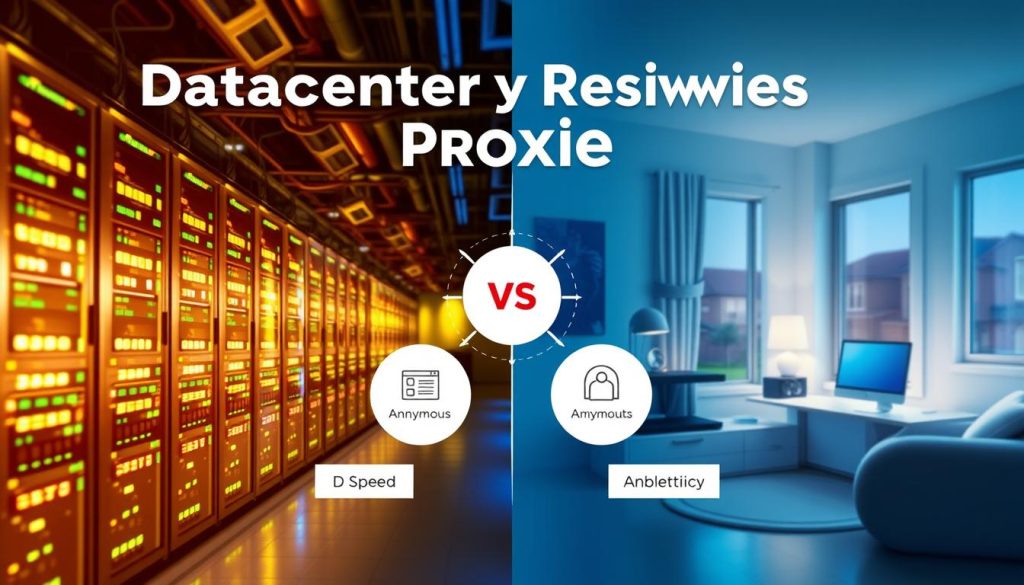
Understanding these differences helps you pick the right proxy. Whether for web scraping, SEO, or other tasks, knowing the difference is key.
Datacenter Proxies Explained
Datacenter proxies are fast and reliable. They route your requests through IP addresses in data centers. This makes them faster and more stable than other proxies.
How Datacenter Proxies Work
Datacenter proxies are like middlemen between you and the internet. They use IP addresses from data centers, not your ISP. This means faster connection speeds and higher stability.
But, these IP addresses can be spotted by websites and anti-bot systems. This is because they’re not from a home internet connection.
Types of Datacenter Proxies
Datacenter proxies come in two main types: shared and dedicated. Shared datacenter proxies are used by many users at once. They’re cheaper but can be slower because of shared bandwidth.
Dedicated datacenter proxies are for one user only. They offer faster speeds and better security.
Key Features and Capabilities
Datacenter proxies are known for their high speed and stability. They’re great for tasks like web scraping and SEO monitoring. A top expert says, “Datacenter proxies are a reliable choice for businesses managing their online presence.”
“Datacenter proxies are a game-changer for businesses that require high-speed data processing and reliable connections.”
But, their non-residential IP addresses can make them more detectable.
Residential Proxies Explained
Residential proxies use IP addresses from Internet Service Providers (ISPs) for homes. They are great for tasks needing to look real and not be caught.
How Residential Proxies Work
Residential proxies send your internet requests through IP addresses from real homes. This makes it seem like you’re coming from a real place. It helps avoid being seen by websites or services online.
Types of Residential Proxies
There are two main types: static and rotating. Static residential proxies give you the same IP address always. This is good for things needing a steady IP. Rotating residential proxies change the IP with each request. This makes it even harder to be found.
Key Features and Capabilities
Residential proxies have many benefits. They offer high anonymity and can get past geo-restrictions. They also lower the chance of being blocked by websites. They’re great for web scraping, social media management, and ad verification. But, they might be slower and cost more than datacenter proxies.

Performance Comparison: Speed, Stability, and Reliability
When picking a proxy, it’s important to look at how fast, stable, and reliable it is. We need to check things like how quickly it connects, how often it works, and how well it handles different tasks.
Connection Speed Analysis
Datacenter proxies are usually quicker than residential ones. They use special networks that move data fast. This is great for tasks that need quick data transfer.
Uptime and Stability Factors
Datacenter proxies are more stable and work more often than residential ones. They have their own special setup, which means they work well all the time. Residential proxies, on the other hand, can be less reliable because they use regular internet connections.
Reliability in Different Scenarios
Datacenter proxies are fast and stable, but residential proxies are better at getting past website blocks. They use real IP addresses, which helps them get around blocks more easily.
| Proxy Type | Speed | Stability | Reliability |
|---|---|---|---|
| Datacenter Proxies | High | High | Variable |
| Residential Proxies | Variable | Variable | High |
It’s key to know the differences between datacenter and residential proxies. By looking at these proxy network comparison points, you can choose the right one for your needs.
Security and Anonymity Levels
It’s important to know the security and anonymity levels of different proxies. When picking between datacenter and residential proxies, think about detection risk, anonymity, and security. This helps you make a smart choice.
Detection Risk Assessment
Datacenter proxies are more likely to be seen by websites and services. Their IP addresses are often blacklisted. Residential proxies, on the other hand, are less likely to be detected. They use real devices and internet service providers.
A study showed residential proxies are significantly less likely to be blocked than datacenter proxies.
Anonymity Levels Compared
Residential proxies offer more anonymity than datacenter proxies. They use IP addresses from internet service providers, making their traffic seem more real. Datacenter proxies, with their IP addresses from data centers, are easier to spot.
Choosing between these proxies depends on how much anonymity you need for your online activities.
Security Features and Vulnerabilities
Both datacenter and residential proxies have their own security strengths and weaknesses. Datacenter proxies are faster and more secure but can get blocked. Residential proxies offer better anonymity but security can vary based on the device and network.
It’s key to think about these factors when picking a proxy. Some residential proxy providers use advanced security measures to protect user data.
In summary, when comparing datacenter and residential proxies, consider their security and anonymity levels. Your needs will help you decide whether to choose speed, anonymity, or security features.
Cost Analysis: Pricing Models and Value Proposition
When choosing between datacenter and residential proxies, cost matters a lot. The prices of these proxies vary, affecting how much you spend and what you get for it.
Datacenter Proxy Pricing Structures
Datacenter proxies cost less than residential ones. They come with pricing plans like flat-rate bandwidth or per IP charges. This is good for those needing lots of IPs or bandwidth.
Key Pricing Factors:
- Flat-rate bandwidth pricing
- Per IP address charges
- Tiered pricing structures
Residential Proxy Pricing Structures
Residential proxies are pricier because of the cost to keep a network of residential IPs. They’re often charged by the gigabyte, which can add up for heavy users. Some offer flat rates, but this is rare.
| Pricing Model | Datacenter Proxies | Residential Proxies |
|---|---|---|
| Per IP/GB | Lower cost per IP | Higher cost per GB |
| Flat Rate | Common for bandwidth | Less common, more expensive |
The table shows how pricing for datacenter and residential proxies varies. Knowing these differences helps pick the right proxy for your needs.
Specific Use Cases for Proxy Types
Knowing the strengths of each proxy type is key. This helps pick the best tool for your online tasks. Datacenter and residential proxies each have their own benefits, fitting different needs.
Web Scraping and Data Collection
Datacenter proxies are great for quick web scraping on less secure sites. They’re fast and cheap. But, for scraping secure sites, residential proxies are better. They’re less likely to get blocked.
SEO Monitoring and Research
Datacenter proxies work well for large-scale SEO monitoring on less secure sites. For SEO research targeting specific locations, residential proxies offer more accurate results.
Social Media Management
For managing many social media accounts, residential proxies are best. They help avoid bans by making it seem like accounts are accessed from different places.
Ad Verification and Brand Protection
Both types can help with ad verification. But, residential proxies are better for brand protection. They mimic real user behavior, catching fraud more easily.
| Task | Datacenter Proxies | Residential Proxies |
|---|---|---|
| Web Scraping (Less Secure Sites) | Suitable | Less Suitable |
| Web Scraping (Highly Secure Sites) | Less Suitable | Suitable |
| SEO Monitoring (Large Scale) | Suitable | Less Suitable |
| SEO Monitoring (Geo-Targeted) | Less Suitable | Suitable |
Setting Up and Managing Your Proxy Network
To get the most from proxies, knowing how to set them up and manage them is important. Whether you’re using datacenter or residential proxies, setting them up right and managing them well is key. This helps you reach your online goals.
Datacenter Proxy Setup and Management
Setting up datacenter proxies means picking a reliable provider. Look for one with fast connections and strong infrastructure. You need to set up your proxies for your specific needs, like web scraping or SEO monitoring.
Managing them well means watching how they perform, changing IPs when needed, and following the provider’s rules.
Here’s a comparison of key considerations for datacenter proxy setup:
| Feature | Description | Importance |
|---|---|---|
| Provider Reliability | Choosing a provider with a strong uptime record | High |
| IP Rotation | Rotating IPs to avoid detection | Medium |
| Configuration | Setting up proxies for specific tasks | High |
Residential Proxy Setup and Management
Setting up residential proxies means picking a provider with lots of different IPs. This helps avoid being detected. You’ll need to set up your proxies to rotate and make sure you follow the provider’s rules.
Managing residential proxies well means keeping an eye on how they do, changing IPs as needed, and keeping your online activities private.
By following these tips, you can make your proxy network better for performance and reliability. This ensures your online activities are smooth and efficient.
How to Choose Between Datacenter and Residential Proxies
To choose between datacenter and residential proxies, first think about what you need. Consider the task, how much anonymity you need, and your budget. These are key factors.
Assessing Your Specific Needs
Think about the websites or services you’ll be using. For example, web scraping needs a different proxy than SEO monitoring. Residential proxies are better for sites with strict rules because they offer more anonymity.
But, if you need fast and cheap solutions for ad verification, datacenter proxies are a good choice.
Budget Considerations
Money matters a lot in your decision. Datacenter proxies are cheaper than residential ones. They’re a good option if you’re on a tight budget.
But, if you need top-notch anonymity and are willing to spend more, residential proxies are worth it.
Decision Framework and Recommendations
Here’s a simple guide to help you decide:
| Criteria | Datacenter Proxies | Residential Proxies |
|---|---|---|
| Speed | Fast | Variable |
| Anonymity | Medium | High |
| Cost | Low | High |
If you want speed and don’t mind spending less, go for datacenter proxies. For top anonymity, choose residential proxies.
Conclusion: Making the Right Choice for Your Proxy Needs
Choosing between datacenter proxies and residential proxies depends on your needs. Datacenter proxies are fast and great for quick tasks like web scraping. Residential proxies offer more privacy and are good for social media and ad checks.
Looking closely at both types shows that the right choice varies by use. For SEO, you need proxies that are both fast and private. Knowing your needs helps pick the best proxy for you.
Picking the right proxy is key to reaching your online goals. Whether it’s boosting your SEO or managing social media, understanding the differences is crucial. This way, you can pick the best proxies for your needs and succeed.