FTC disclaimer: This post contains affiliate links and I will be compensated if you make a purchase after clicking on my link.
Did you know that nearly 75% of online activities can be blocked or restricted? This is because of IP address limitations. It’s important to pick the right proxy type for smooth browsing and data scraping. You have two main choices: proxies from internet service providers and those from residential locations.
ISP proxies are great for fast data transfer. They offer high speeds and stability. Residential proxies, on the other hand, give you more anonymity. They are less likely to be detected, perfect for tasks needing a real IP address.
Key Takeaways
- Understand the differences between ISP and residential proxies.
- Learn how to choose the right proxy for your specific needs.
- Discover the benefits of using proxies from internet service providers.
- Explore the advantages of residential proxies in maintaining anonymity.
- Find out how to optimize your proxy usage for better performance.
The Growing Importance of Proxy Servers in Today’s Digital Landscape
In today’s world, proxy servers are key for both people and companies. They help us deal with the online world’s complexities. Knowing about proxy servers is very important.

What is a Proxy Server and How Does it Work?
A proxy server is like a middleman between you and the internet. It sends your requests to the web for you. This keeps your IP address hidden, so you stay anonymous online.
Using a proxy server lets you hide your location. This makes it hard for websites to know what you’re doing.
Why Businesses and Individuals Need Proxies in 2023
In 2023, online security and privacy are big concerns. Companies use proxies to check the market and keep an eye on rivals. They also use them to manage their online image.
People use proxies to see content blocked in their area, keep their identity safe, and stay private online. With more work and shopping online, we need good and safe proxy services more than ever.
When picking a proxy server, it’s important to know the different types. ISP proxies and residential proxies each have their own benefits. They help with security, performance, and privacy. Picking the right proxy can really change how you use the internet.
ISP Proxies vs Residential Proxies: Key Differences Explained
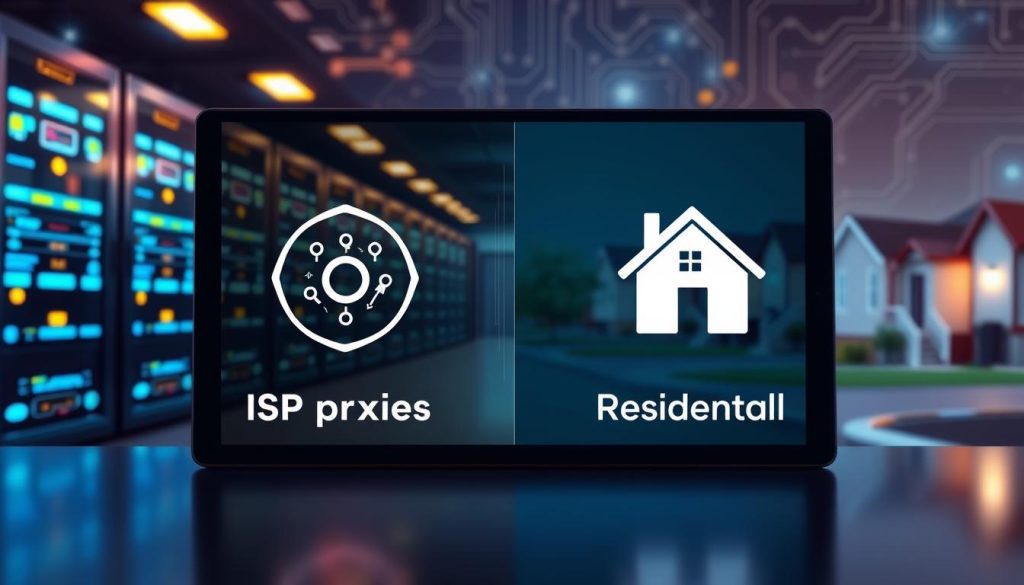
ISP proxies and residential proxies have different uses. Knowing their unique features helps you pick the best one for you. The main differences are in their origin, setup, and how they work.
Origin and Infrastructure Differences
ISP proxies come from your Internet Service Provider. They offer speed, stability, and are seen as legitimate. They are easy to set up and manage.
Residential proxies use real devices’ IP addresses. They are very legitimate but might be slower because they change often.
IP Classification and Detection Risk Factors
IP addresses are classified differently for ISP and residential proxies. ISP proxies are easy to spot as proxy services. Residential proxies look like real home IPs, making them less likely to be caught.
But, their changing IPs can sometimes raise detection risks if not handled well.
Authentication and Setup Requirements
Setting up ISP proxies is simpler and requires less authentication. Residential proxies need more complex setup and authentication. This includes rotating IPs and managing session times.
Knowing these differences is key to choosing the right proxy for your needs. Whether it’s for web scraping, SEO, or other online tasks.
What Are ISP Proxies? A Comprehensive Overview
ISP proxies are special in the world of proxy servers. They are fast and reliable. They come from Internet Service Providers and are hosted in strong data centers.
Technical Definition and Architecture
ISP proxies mix the good points of data center and residential proxies. They are hosted on data centers but look like they come from ISPs. This makes them seem real to websites.
The setup includes:
- High-speed data centers
- IP allocation by ISPs
- Advanced traffic routing
How ISP Proxies Are Created
ISP proxies are made by working together with proxy providers and ISPs. They pick the right data centers, get IP addresses, and set up the proxy servers.

Knowing about ISP proxies shows their benefits. They are fast and stable, perfect for tasks needing quick and real connections.
What Are Residential Proxies? A Detailed Examination
Residential proxies are getting more popular. They give a real IP address, making them hard to tell apart from regular users. This is great for things like SEO monitoring and accessing geo-sensitive content.
Technical Definition and Infrastructure
Residential proxies use real IP addresses from home devices. They work with internet service providers (ISPs) to do this. This makes the traffic look like it’s coming from a home user, helping avoid detection.
How Residential Proxies Are Sourced and Operated
They are found through crowdsourcing and ISP partnerships. The setup involves software on devices. This creates a wide range of IP addresses, making it hard for sites to block them.
“The use of residential proxies is becoming a game-changer for businesses that rely on web scraping and data collection.”

Learning about residential proxies can help you decide if they’re right for you.
Performance Comparison: Speed, Stability, and Reliability
It’s key to know how ISP and residential proxies differ. This choice affects your online work, like web scraping or SEO. The right proxy can make a big difference.
Connection Speed and Latency Analysis
ISP proxies are usually quicker and steadier than residential ones. They’re hosted in data centers, not homes. This makes them up to 50% faster in some cases.
Uptime and Stability Metrics
Residential proxies might be slower but can be very reliable if managed well. But, their stability can change a lot. ISP proxies, on the other hand, are more stable because of their strong setup. They often have higher stability ratings than residential ones.
| Proxy Type | Average Speed | Uptime |
|---|---|---|
| ISP Proxy | High | 99.9% |
| Residential Proxy | Variable | 95-99% |
Reliability in High-Volume Operations
For big tasks like web scraping, ISP proxies are more dependable. They perform well and are less likely to get blocked. Residential proxies are good for tasks needing many IP addresses but need better management for reliability.
Cost Analysis: Pricing Models and ROI Considerations
When looking at proxy services, knowing the costs is key. ISP proxies and residential proxies have different prices. This affects your return on investment (ROI).
ISP Proxy Pricing Structures and Value Proposition
ISP proxies cost more because they offer fast and reliable connections. Prices range from $1 to $5 per proxy. When buying ISP proxies online, think about what you get. You get fast speeds, high uptime, and support for lots of tasks.
Premium ISP proxy services often give better ROI. They are reliable and perform well. For example:
| Provider | Price per Proxy | Features |
|---|---|---|
| Provider A | $2 | High-speed, 99% uptime |
| Provider B | $3 | High-speed, 99.9% uptime, dedicated support |
Residential Proxy Pricing Structures and Value Proposition
Residential proxies have varying costs. Prices range from $0.5 to $2 per proxy. The residential proxy benefits include a real IP address. This lowers the chance of being detected. When looking at residential proxy prices, weigh the cost against performance.
Choosing between ISP and residential proxies depends on your needs and budget. A detailed cost analysis will help you get the most ROI. This way, you can meet your business goals.
Security and Anonymity Considerations for Both Proxy Types
When choosing between ISP proxies and residential proxies, think about security and anonymity. Each type has its own strengths and weaknesses.
Detection Rates and Ban Risks
Residential proxies are better at hiding your identity. They look like real internet connections. ISP proxies, while stable, might get caught by strict anti-bot rules.
Privacy Protections and Data Handling Practices
Both types of proxies protect your privacy in their own way. ISP proxies give you stable connections. Residential proxies offer more anonymity, perfect for tasks needing a real IP.
Check how your proxy provider handles your data to meet your privacy needs.
IP Rotation and Session Management
IP rotation is key for staying hidden. Residential proxies let you change IP addresses often. ISP proxies might offer this too, but it depends on the provider.
Good session management keeps you anonymous and avoids detection, important for big operations.
Use Case Analysis: Best Applications for Each Proxy Type
Choosing between ISP proxies and residential proxies is key. Each has its own best use. Knowing this helps get the best results online.
Web Scraping and Data Collection Scenarios
ISP proxies are top for web scraping and data collection. They offer fast speeds and are stable. This makes them great for quick data grabs without getting blocked.
| Proxy Type | Speed | Stability | Anonymity |
|---|---|---|---|
| ISP Proxies | High | High | Medium |
| Residential Proxies | Variable | Medium | High |
SEO Monitoring and Competitor Analysis
Residential proxies shine in SEO and competitor analysis. They offer great anonymity and mimic real users. This is perfect for keyword research and tracking rivals.
Social Media Management and Automation
ISP proxies are great for social media tasks. They’re fast and reliable. This lets you manage many accounts at once without security issues.
E-commerce and Retail Applications
In e-commerce, residential proxies are best for geo-targeting. They help with price checks and market research. They also let you see geo-restricted content for a clearer market view.
In short, picking between ISP and residential proxies depends on your project needs. Knowing each type’s strengths helps you choose wisely. This boosts your online work.
How to Choose Between ISP and Residential Proxies for Your Specific Needs
Choosing between ISP and residential proxies depends on your needs. You must think about performance, security, and cost. This helps you make the right choice.
Assessment Questions to Determine Your Requirements
Before making a decision, ask yourself some questions. What do you need the proxies for? Do you want fast speeds or more privacy? Are you targeting certain areas? Answering these will guide you to the right proxy.
Decision Framework Based on Business Objectives
Think about your business goals when deciding. If you need fast and reliable connections, ISP proxies might be best. But, if you need more privacy and to access blocked content, residential proxies are better. Evaluate your needs carefully to choose wisely.
Provider Selection Criteria and Red Flags
After deciding on a proxy type, look for a good provider. Check their reputation, pricing, customer support, and proxy quality. Avoid providers with bad reviews, unclear prices, or frequent outages. A reliable provider is key to your success.
Conclusion: Making the Right Proxy Choice for Long-Term Success
You now know the main differences between ISP and residential proxies. They vary in performance, cost, and security. Think about what you need most when picking a proxy server type.
If you want a mix of speed and privacy, ISP proxies might be good. For tasks needing real authenticity, like web scraping or SEO, residential proxies are better. Your choice depends on your specific needs and goals.
When picking a proxy provider, look at speed, uptime, and support. The right choice can help you succeed online.